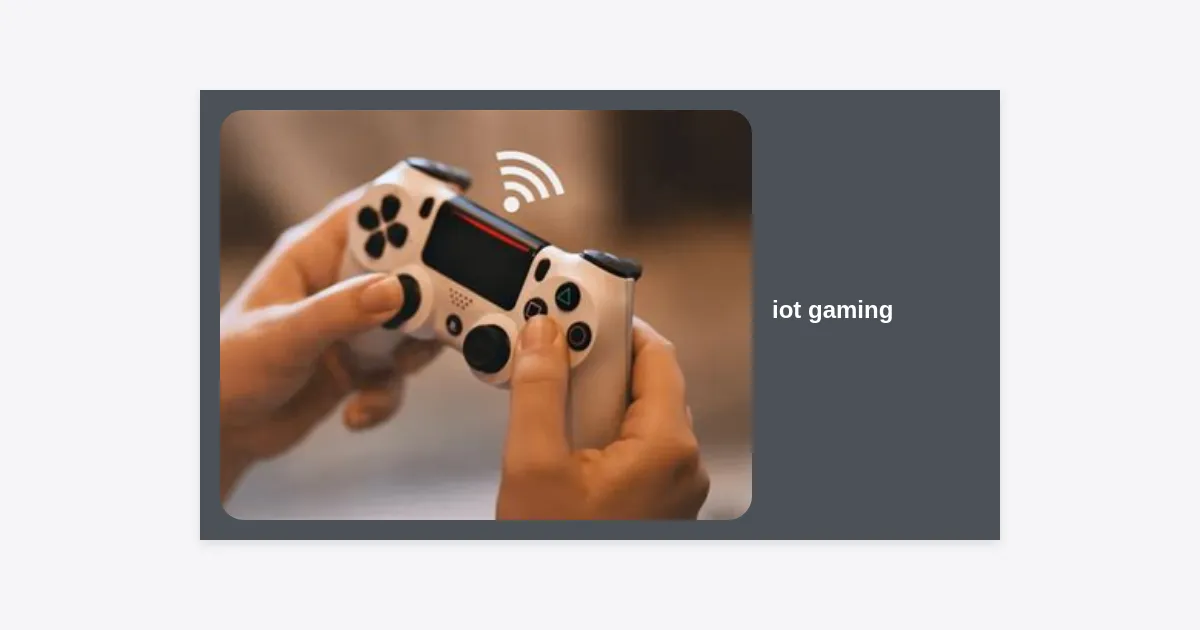
Imagine you are playing a high-stakes horror game. As your character creeps through a damp, dark basement, the smart lights in your living room dim to a deep crimson. Your wearable heart rate monitor detects your spiking pulse and triggers a heavy vibration in your haptic vest, making you feel every frantic beat of your heart. This isn’t science fiction; this is the reality of iot gaming. By bridging the gap between the digital and physical worlds, the Internet of Things is fundamentally changing how we interact with entertainment.
As technology advances, gaming is no longer confined to a screen. It has become an ecosystem of interconnected devices that respond to our movements, biological signals, and environments. In this comprehensive guide, we will explore the landscape of iot gaming, the technologies driving it, and how you can leverage these innovations to enhance your gaming experience.
Table of Contents
- What is IoT Gaming? Defining the Connected Experience
- The Evolution of Connectivity in the Gaming Industry
- Key Technologies Powering IoT Gaming
- Real-World Examples of IoT in Modern Gaming
- The Major Benefits of IoT Gaming for Players and Developers
- Navigating Challenges: Privacy and Edge Computing
- Practical Advice: How to Set Up Your IoT-Enabled Gaming Room
- The Future of IoT Gaming: AI, 5G, and Beyond
- Frequently Asked Questions
- Conclusion: The Intersection of Reality and Virtual Play
What is IoT Gaming? Defining the Connected Experience
At its core, iot gaming refers to the integration of Internet of Things (IoT) technology into video games and gaming hardware. This involves using smart devices—sensors, wearables, smart home appliances, and connected peripherals—to collect data and influence gameplay or environmental immersion.
Traditional gaming relies on a controller or a keyboard. In contrast, iot gaming leverages “smart objects” to create synergy. For example, a physical smart ball can be used to control a digital character in a mobile game, or an IoT-connected fitness tracker can translate your real-world calories burned into in-game currency. This creates a bidirectional flow of information between the digital game engine and the physical world.
The Core Components of an IoT Gaming Ecosystem
To understand how this works, we must look at the three primary layers of the architecture:
- The Perception Layer: Hardware like sensors, RFID tags, and cameras that capture real-world data.
- The Network Layer: Protocols like Wi-Fi, 5G, Zigbee, and Bluetooth that transmit data to the cloud or local server.
- The Application Layer: The software (the game itself) that interprets this data and changes the game state or environment.
The Evolution of Connectivity in the Gaming Industry
The journey to iot gaming has been decades in the making. In the early days, gaming was localized—think of the physical connection of two Game Boys via a Link Cable. The introduction of broadband internet moved gaming into the realm of massively multiplayer online games (MMOs), but the interaction remained limited to the monitor.
In the 2010s, the rise of smartphone sensors and AR (Augmented Reality) provided the first massive glimpse into connected play. Games like Pokémon GO utilized GPS and camera data, turning the entire planet into a game board. Today, with billions of connected devices globally, we are entering an era where the data from your smart watch or your smart thermostat is just as relevant to the game as your GPU performance.
Key Technologies Powering IoT Gaming
Several technological breakthroughs have converged to make iot gaming viable for the mainstream market. Without these innovations, the latency and bandwidth requirements would make the experience frustrating rather than immersive.
1. 5G and Low-Latency Networks
High latency is the enemy of any gamer. For IoT devices to sync with a fast-paced action game, the data must travel back and forth in milliseconds. 5G technology provides the necessary bandwidth and ultra-low latency to ensure that when you move your arm in a haptic suit, the game responds instantly.
2. Wearable Biometric Sensors
Devices like the Apple Watch, Oura Ring, or specialized gaming wearables can monitor heart rate, skin temperature, and sweat levels. These metrics provide a window into the player’s emotional state, allowing the game’s AI to adjust difficulty or atmosphere dynamically.
3. Edge Computing
Instead of sending all data to a distant cloud server, edge computing processes data closer to the source (the gamer’s local network). This is crucial for iot gaming because it reduces the “trip time” for data, enabling real-time feedback loops between smart lights and in-game events.
4. Haptic Feedback and Actuators
Haptic gear goes beyond a rumbling controller. Suits like the Teslasuit use electro-muscular stimulation (EMS) to simulate sensations of touch, temperature, and even impact. These are essentially complex IoT devices that communicate with the game’s physics engine.
Real-World Examples of IoT in Modern Gaming
To illustrate how iot gaming is currently utilized, let’s look at some prominent examples that have moved beyond the experimental phase:
“The goal of IoT in gaming is to make the interface invisible. When the environment itself becomes the controller, the immersion becomes absolute.”
- Phillips Hue & Razer Chroma: These systems sync your room’s smart lighting with the colors on your screen. If an explosion occurs in the game, your entire room flashes orange and yellow, extending the visual experience beyond the bezel.
- Zwift and Connected Fitness: Zwift is a prime example of iot gaming in the fitness niche. It connects your stationary bike or treadmill to a virtual world. The resistance of your bike increases as your avatar climbs a hill, turning a workout into a competitive MMO.
- Sphero: These are app-enabled robotic balls that use advanced internal sensors and IoT connectivity to let users play augmented reality games or learn coding through physical interaction.
The Major Benefits of IoT Gaming for Players and Developers
Why should we care about iot gaming? It isn’t just a gimmick; it offers tangible improvements to the gaming experience and provides developers with new tools for storytelling.
Enhanced Immersion
The primary draw is immersion. By involving more senses and environmental factors, players feel more “inside” the game. This psychological state, often called “flow,” is much easier to achieve when the physical world mirrors the virtual one.
Promoting Physical Health
Many iot gaming applications focus on gamifying physical activity. By rewarding players for real-world steps or calories burned, developers can combat the sedentary nature of traditional gaming, making it a tool for wellness rather than just leisure.
Data-Driven Personalization
IoT allow games to adapt to the individual. If a horror game detects that your heart rate is not rising, it can trigger more intense scares or change the pacing. This level of personalization ensures that the challenge level is always optimized for the specific user.
Navigating Challenges: Privacy and Edge Computing
With great connectivity comes great responsibility. The rise of iot gaming introduces several hurdles that the industry must overcome to ensure long-term success.
1. Data Privacy
When a game tracks your heart rate, location, and even your facial expressions, it is collecting highly sensitive personal data. Ensuring that this data is encrypted and not sold to third parties is a major concern for the iot gaming community. Developers must adhere to strict GDPR and CCPA regulations.
2. Interoperability
Currently, the IoT market is fragmented. Your smart lights might use one protocol, while your haptic vest uses another. For iot gaming to truly flourish, we need unified standards like Matter to ensure that all devices can talk to each other seamlessly.
3. Security Vulnerabilities
Every connected device is a potential entry point for hackers. If an IoT gaming peripheral is not properly secured, it could be used to gain access to a user’s home network. Robust firmware updates and security-first design are non-negotiable.
Practical Advice: How to Set Up Your IoT-Enabled Gaming Room
If you want to dive into iot gaming today, you don’t need a million-dollar budget. You can start small and build an ecosystem that enhances your play.
- Invest in Smart Lighting: Start with a Philips Hue or Govee setup. Most modern PC and console games can sync with these via easy-to-use software.
- Use a Fitness Tracker: Use apps like Strava or Zwift to connect your existing wearable to gaming platforms.
- Optimize Your Router: Ensure you have a Wi-Fi 6 router. IoT devices can crowd a network, and a high-quality router manages these multiple connections without dropping your game’s ping.
- Explore AR Mobile Games: Dive into titles like Pikmin Bloom or Jurassic World Alive to see how IoT and GPS data create shared gaming realities.
For a detailed breakdown of the best equipment, you can download our comprehensive setup guide below.
The Future of IoT Gaming: AI, 5G, and Beyond
The future of iot gaming is incredibly bright. We are moving toward a concept known as the “Metaverse,” where the physical and digital are indistinguishable. In this future, your entire smart home could become a game level. Your smart fridge could notify the game that you’re low on “health potions” (water), and your smart locks could stop you from leaving a room until a puzzle is solved.
Furthermore, AI will play a massive role. AI will analyze the massive streams of data coming from IoT devices to create procedural game worlds that react to your lifestyle. The more you move in real life, the more the game world thrives. This synergy will redefine the very concept of a “video game.”
Frequently Asked Questions
Does IoT gaming require a high-speed internet connection?
Yes, for the best experience, a stable internet connection with low latency is essential. While some data can be processed locally, syncing with online leaderboards and multiplayer environments requires significant bandwidth, preferably over a 5G or fiber connection.
Is IoT gaming safe for children?
Iot gaming is safe as long as parents manage privacy settings and ensure devices are updated. Many IoT games for kids focus on education and physical movement, which can be more beneficial than traditional screen time.
Can I use my existing smart home devices for gaming?
Many brands like Philips, TP-Link, and Razer offer integrations that allow your existing smart bulbs and plugs to interact with gaming software. Check if your devices supports IFTTT (If This Then That), which can help bridge the gap between non-gaming devices and your PC.
Conclusion: The Intersection of Reality and Virtual Play
iot gaming is more than just a buzzword; it is the next logical step in the evolution of entertainment. By leveraging the power of sensors, wearables, and high-speed networks, developers are creating experiences that are more personal, immersive, and physically engaging than ever before.
Key Takeaways:
- IoT gaming connects physical hardware with digital game engines to create immersive environments.
- Technologies like 5G, haptics, and biometrics are the backbone of this movement.
- While security and privacy are concerns, the benefits to player immersion and health are significant.
- Starting an IoT gaming setup can be as simple as adding smart bulbs to your room.
As we look forward, the boundaries between our physical lives and our digital adventures will continue to blur. Whether you are a casual mobile gamer or a competitive esports professional, iot gaming will undoubtedly play a role in your future play sessions. Get ready to step into a world where every move you make matters—both in reality and on the screen.