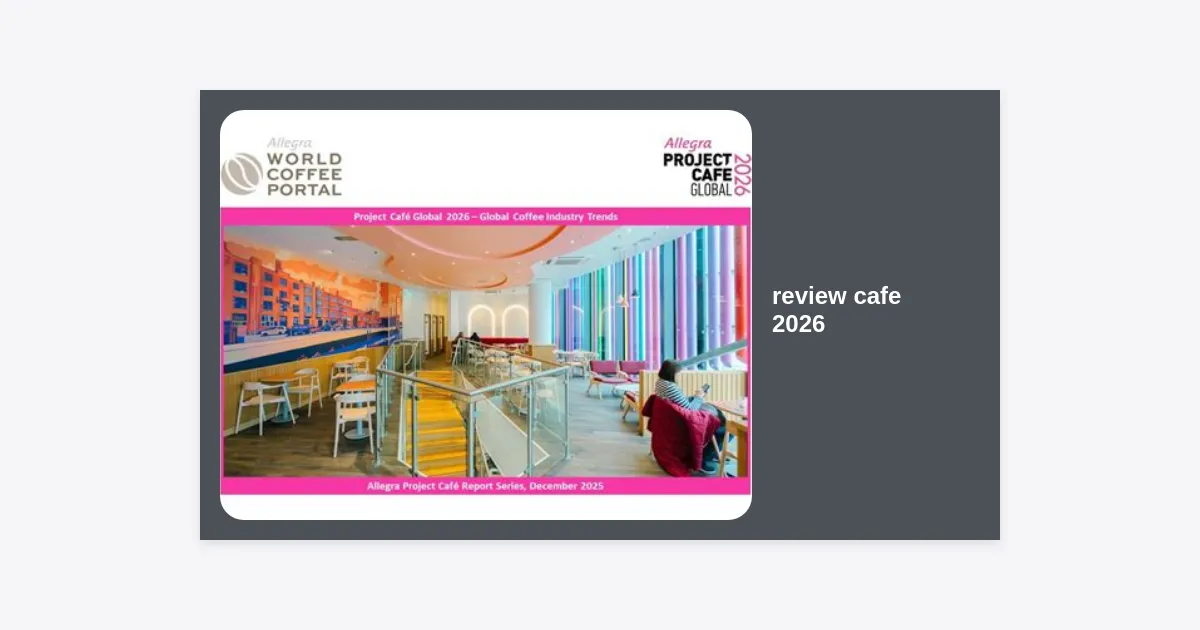
Are you wondering how your morning routine or your local business will change over the next few years? As we look ahead, the review cafe 2026 landscape reveals a industry in the midst of a massive technological and social metamorphosis. Whether you are a dedicated coffee connoisseur, a cafe owner, or an investor, understanding these shifts is crucial for staying ahead of the curve.
In this comprehensive guide, we will explore why the year 2026 is being marked as the ‘Great Reset’ for coffee shops globally. We will delve into the integration of artificial intelligence, the rising demand for hyper-sustainability, and how the ‘Third Place’ concept is being redefined for a post-digital generation. This is not just a glimpse into the future; it is a roadmap for the upcoming era of hospitality.
Table of Contents
- The Evolution of the Third Place in 2026
- Technological Innovations: Automation Meets Personalization
- Sustainability and Ethical Sourcing: The New Standard
- Interior Design Trends: Biophilia and Multifunctional Spaces
- Menu Innovations: Beyond Traditional Coffee
- Operational Excellence: Navigating High Costs
- Conclusion: Preparing for the 2026 Coffee Era
The Evolution of the Third Place in 2026
For decades, the cafe has served as the “Third Place”—a social environment distinct from home and work. However, our review cafe 2026 research suggests that this concept is splintering into two distinct paths: the ‘Efficiency Hub’ and the ‘Experiential Sanctuary.’
By 2026, the rise of remote and hybrid work will have matured. Cafes are no longer just places with Wi-Fi; they are specialized coworking environments. We are seeing the emergence of semi-private pods and soundproof booths integrated into the cafe layout, allowing for seamless video calls without disturbing the quiet ambiance of other patrons.
On the other hand, the Experiential Sanctuary focuses on slow coffee. These are spaces designed to disconnect users from their devices. In these locations, ‘digital detox’ zones are becoming a premium feature, encouraging face-to-face interaction and mindfulness. This duality ensures that the cafe remains relevant to both the busy professional and the leisure seeker.
Technological Innovations: Automation Meets Personalization
Technological advancement is the primary driver in any review cafe 2026 forecast. The integration is no longer subtle; it is foundational. However, the focus has shifted from replacing humans to augmenting the human experience.
AI-Driven Personalization
Imagine walking into a cafe where the point-of-sale system recognizes your preferences via a secure app and suggests a brew based on your previous ratings, the current weather, and even your biometric data (if shared). AI is now capable of managing hyper-personalized loyalty programs that go far beyond “buy ten, get one free.”
Precision Brewing Systems
Automation in 2026 is about consistency. Smart grinders and espresso machines now use real-time sensors to adjust for humidity and bean degassing, ensuring every shot is perfect. This allows baristas to focus more on customer engagement and latte art rather than the technical minutiae of dialling in the coffee.
- Self-Service Kiosks: High-end, tactile interfaces that allow for complex customization.
- Robotic Service: Used primarily for routine tasks like cleaning or basic pouring to free up staff.
- Blockchain Tracking: Customers can scan a QR code on their cup to see the exact farm and date their beans were harvested.
Sustainability and Ethical Sourcing: The New Standard
In 2026, sustainability is no longer a marketing buzzword; it is a licensing requirement in many urban centers. A thorough review cafe 2026 must emphasize the shift toward a circular economy within the beverage industry.
Consumers are demanding total transparency. This has led to the rise of ‘Direct-to-Consumer’ (D2C) sourcing at scale, where cafes partner directly with farmers, cutting out recursive middle-men and ensuring a living wage is paid. Research indicates that 74% of coffee drinkers in 2026 are willing to pay a 15% premium for coffee that is certified carbon-neutral.
“The future of the cafe is green or non-existent. By 2026, we expect to see the complete phasing out of single-use plastics in favor of seaweed-based or fully compostable packaging solutions.”
Furthermore, waste management has become a profit center. Used coffee grounds are being repurposed into fertilizers, biofuel, or even construction materials, creating a closed-loop system that resonates with the eco-conscious values of Gen Z and Alpha.
Interior Design Trends: Biophilia and Multifunctional Spaces
What does a top-rated cafe look like in 2026? The aesthetic is moving away from the stark industrialism of the mid-2010s toward ‘Soft Minimalism’ and ‘Biophilic Design.’ This involves integrating living walls, natural light, and organic materials like cork and reclaimed wood to reduce stress and improve air quality.
Multifunctionality is also key. Modern layouts allow for quick transitions. A space that is a quiet morning coffee spot can transform into a community event space or an evening wine bar with minimal effort. Modular furniture and smart lighting systems facilitate these shifts, maximizing the revenue per square foot of the physical location.
Key Design Elements for 2026:
- Acoustic Optimization: Use of sound-absorbing fabrics to allow for intimate conversations in busy spaces.
- Integrated Technology: Wireless charging pads built into wooden tables and discreet digital menus.
- Community Zones: Large communal tables that encourage social interaction and networking.
Menu Innovations: Beyond Traditional Coffee
The review cafe 2026 menu looks vastly different from a decade ago. While the classic flat white remains a staple, the rise of ‘Functional Beverages’ is undeniable. Customers are looking for drinks that perform a specific task for their body and mind.
Functional Coffee and Nootropics
Coffee infused with adaptogens, medicinal mushrooms (like Lion’s Mane or Reishi), and L-theanine is now mainstream. These additions help to mitigate the ‘caffeine jitters’ and provide sustained cognitive focus, appealing to the wellness-oriented demographic.
The Plant-Based Evolution
Dairy-free is no longer the alternative; in many urban cafes, it is the default. Innovations in precision fermentation have allowed for the creation of animal-free dairy proteins that taste and froth exactly like cow’s milk, without the environmental footprint. This ‘Lab-to-Latte’ movement is a major trend to watch in 2026.
Operational Excellence: Navigating High Costs
Running a cafe in 2026 is not without its challenges. Climate change has impacted coffee crop yields, leading to higher green bean prices. To remain profitable, cafe owners are turning to data analytics to optimize their operations.
Predictive inventory management helps reduce food waste, while energy-efficient appliances lower utility bills. Furthermore, the role of the’Barista’ has evolved into a’Coffee Sommelier.’ Staff are trained deeper in the science of flavor profiles and origin stories, providing a level of expertise that justifies higher price points for specialty brews.
For those looking to optimize their own business model, we have prepared a comprehensive strategy document based on our 2026 findings.
Conclusion: Preparing for the 2026 Coffee Era
The journey of the coffee shop from a simple beverage provider to a high-tech, sustainable community hub is truly remarkable. As our review cafe 2026 analysis shows, success in this new era requires a balance of innovation and human connection.
Key Takeaways:
- Embrace Technology: Use AI and automation to enhance consistency and free up staff for better service.
- Prioritize Sustainability: Implement circular waste systems and transparent sourcing to meet consumer expectations.
- Redesign for the User: Create spaces that cater to both the ‘quick-stop’ worker and the ‘slow-stay’ relaxer.
- Expand the Menu: Incorporate functional ingredients and precision-fermented dairy alternatives.
By focusing on these pillars, you can ensure that your relationship with coffee—whether as a business owner or a consumer—remains vibrant and sustainable in 2026 and beyond. Keep brewing, keep innovating, and stay grounded in the community that makes coffee culture so unique.