Table of Contents
- Understanding the Metaverse Budget Landscape
- Why Financial Planning for the Metaverse is Critical
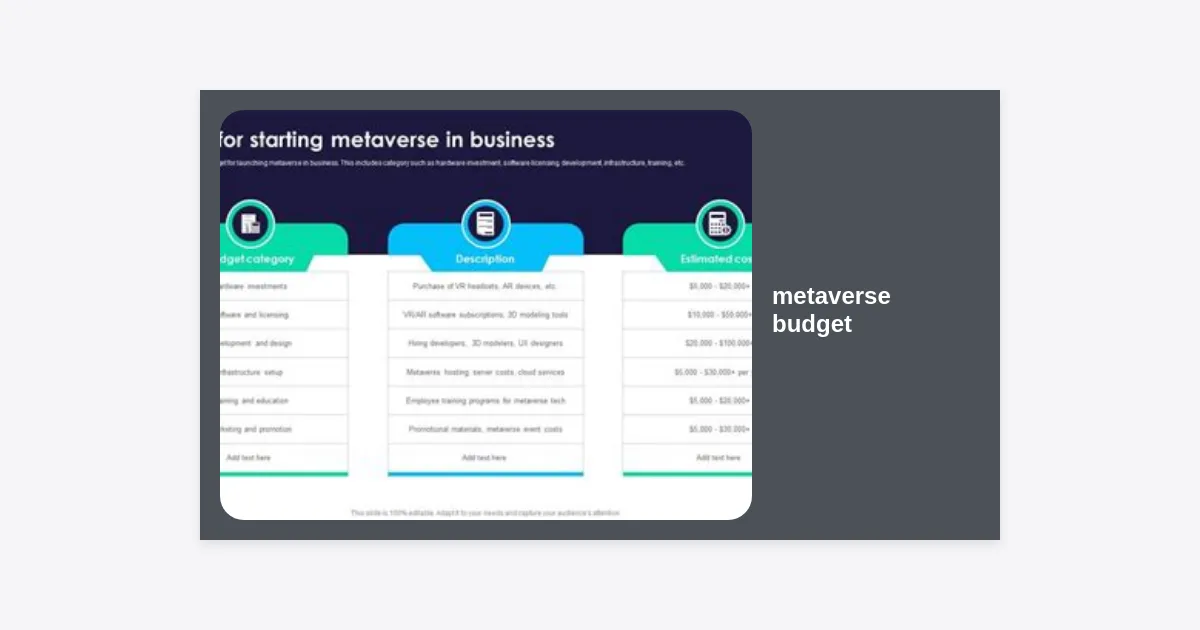
- Core Components of a Metaverse Budget
- Platform Selection and Infrastructure Costs
- Talent and Creative Production Costs
- Marketing and User Acquisition Spend
- Hidden Costs: The Expenses No One Tells You About
- Measuring Success: ROI and Your Metaverse Spend
- Creating Your Metaverse Budget: A Step-by-Step Checklist
- Conclusion: Your Roadmap to Virtual Success
Understanding the Metaverse Budget Landscape
As we move further into the digital age, the question for businesses is no longer if they should enter the virtual realm, but how they can afford to do so effectively. Developing a comprehensive metaverse budget is the first hurdle for any brand, startup, or enterprise looking to claim its stake in a market that McKinsey predicts could generate up to $5 trillion by 2030. However, without a clear financial roadmap, the costs of 3D development, digital real estate, and immersive marketing can quickly spiral out of control.
Whether you are a retail giant building a virtual storefront or a small tech firm hosting immersive training sessions, understanding the nuances of a metaverse budget is essential. This isn’t just about software; it’s about hardware, talent, ongoing maintenance, and community management. In this guide, we will break down every line item you need to consider to ensure your virtual venture is both sustainable and profitable.
Why Financial Planning for the Metaverse is Critical
Building in the metaverse is fundamentally different from building a traditional website or mobile app. While a standard web presence is 2D and largely static, the metaverse is a persistent, 3D, multi-user environment. This complexity reflects directly in the metaverse budget. Companies often underestimate the technical debt and maintenance involved in keeping a virtual world live 24/7.
Strategic financial planning allows you to avoid the “hype trap.” Many companies poured millions into virtual land in 2021 only to let it sit fallow because they didn’t budget for the actual development of that land. A well-structured metaverse budget ensures that your capital is allocated not just to the entry fee, but to the creation of value that keeps users coming back. Authoritative planning is what separates successful pioneers from expensive failures.
Core Components of a Metaverse Budget
When drafting your initial financial strategy, you must categorize your expenses into four main buckets: Infrastructure, Content, Operations, and Marketing. Each of these segments plays a vital role in the health of your project.
1. Infrastructure and Platforms
Will you build your own proprietary platform, or will you lease space on existing networks like Decentraland, The Sandbox, or Roblox? Choosing a platform is the most significant variable in your metaverse budget. Private builds offer more control but carry massive upfront costs for server hosting, security, and world-engine licensing (like Unreal Engine or Unity).
2. Asset Creation and Design
The metaverse is visual. Every chair, avatar, and building must be modeled in 3D. This requires a different set of skills than standard graphic design. Budgeting for high-quality shaders, lighting, and textures is crucial for user immersion. Poorly designed assets can lead to high latency and a bad user experience, ultimately hurting your brand reputation.
Platform Selection and Infrastructure Costs
Selecting the right digital soil is the foundation of your metaverse budget. There are three primary routes businesses take:
- Public Web3 Platforms: Buying or renting land in decentralized spaces. Prices vary wildly based on location—much like physical real estate.
- Centralized Gaming Platforms: Utilizing ecosystems like Fortnite or Roblox. These often involve high platform fees or revenue-sharing models but provide an immediate audience.
- Bespoke Enterprise Solutions: Building a private metaverse instance for internal training or B2B sales. This usually requires a high initial metaverse budget but offers the lowest long-term third-party risk.
- Hosting and Cloud Computing: High-fidelity 3D environments require significant server power. Whether you use AWS, Azure, or Google Cloud, do not overlook the monthly recurring costs of data transfer and latency optimization.
“The most expensive mistake a company can make is choosing a platform that their target demographic doesn’t use. Audience research must precede the budget allocation.”
Talent and Creative Production Costs
Who is going to build your world? The labor market for Web3 and 3D developers is highly competitive. When calculating your metaverse budget, you must account for specialized roles that often command salaries 30-50% higher than traditional web developers.
Essential Personnel Include:
- 3D Environment Artists: To create the world’s aesthetics.
- Unity/Unreal Engine Developers: For the world’s mechanical logic.
- Blockchain Engineers: (If your project involves NFTs or smart contracts).
- UX/UI Designers: Specifically those trained in 3D spatial interfaces.
- Community Managers: To facilitate engagement within the space.
- Safety and Moderation Teams: To ensure a toxic-free environment for users.
For many, outsourcing to a specialized metaverse agency is more cost-effective than hiring in-house. A typical agency project can range from $50,000 for a small activation to over $1,000,000 for a persistent, complex ecosystem.
Marketing and User Acquisition Spend
If you build it, they will not necessarily come. A significant portion of your metaverse budget—perhaps as much as 30%—should be dedicated to marketing. Unlike traditional web traffic, metaverse traffic is often driven by community hype, events, and influencer partnerships.
Consider budgeting for “Metaverse Influencers”—creators who already have a following on platforms like Twitch or Roblox. Additionally, cross-platform promotion is essential. You need to use your 2D social media presence (Instagram, X, TikTok) to funnel users into your 3D world. Don’t forget to include the cost of virtual events, such as concerts or product launches, which are the primary drivers of peak user numbers.
Hidden Costs: The Expenses No One Tells You About
An effective metaverse budget must account for the “invisible” costs that often catch CFOs by surprise. These include:
- Gas Fees and Transaction Costs: If your metaverse uses a blockchain, every transaction (like selling a virtual shirt) will incur a fee.
- Cybersecurity: Protecting your virtual assets from hacks is paramount. Virtual worlds are new targets for data breaches and asset theft.
- Compliance and Legal fees: Navigating the evolving laws regarding digital ownership, virtual currency, and data privacy across global jurisdictions.
- Updates and Maintenance: 3D platforms update their software constantly. You must budget for regular audits to ensure your world remains compatible with the latest browser or device versions.
Measuring Success: ROI and Your Metaverse Spend
How do you justify a massive metaverse budget to stakeholders? You need clear Key Performance Indicators (KPIs). Traditional metrics like “clicks” don’t apply as well here. Instead, focus on:
- Average Dwell Time: How long does a user stay in your environment? High dwell time often correlates with brand affinity.
- UGC (User Generated Content): Are users taking selfies in your world and sharing them on social media? This is free marketing.
- Conversion to Physical Sales: If you sell a virtual item, does it lead to a discount code for a physical product?
- Training Efficiency: For enterprise budgets, measure how much faster employees learn in VR versus traditional video training.
| Metaverse Scale | Estimated Initial Budget | Primary Focus |
|---|---|---|
| Small (POC/Activation) | $25,000 – $75,000 | Single event, basic low-poly assets, third-party platform. |
| Medium (Brand Presence) | $100,000 – $350,000 | Persistent shop or gallery, custom avatars, moderate marketing. |
| Large (Enterprise/Ecosystem) | $500,000+ | Private infrastructure, complex integrations, full-time staff. |
Creating Your Metaverse Budget: A Step-by-Step Checklist
To ensure your project stays on track, follow this actionable checklist when constructing your financial plan:
- Define the Objective: Is this for sales, brand awareness, or internal training? This dictates the entire spend.
- Choose Your Terrain: Research land costs or hosting fees for your top three platform choices.
- Audit Your Technical Needs: List all required integrations (CRM, E-commerce, Blockchain).
- Project Talent Needs: Decide between in-house hires or agency partners.
- Buffer for Volatility: Always add a 15-20% contingency fund to your metaverse budget for unexpected technical hurdles.
- Plan the Launch Event: Resource allocation for a “Big Bang” entry.
For those ready to get started, we have developed a specialized calculator to help you estimate your initial costs.
Conclusion: Your Roadmap to Virtual Success
The metaverse is not just a gaming playground; it is the next evolution of the internet. However, entering this space without a detailed metaverse budget is a recipe for wasted resources. By categorizing your costs into infrastructure, creative, and marketing, and by remaining vigilant about hidden maintenance fees, you can build a virtual presence that provides genuine value to your users and your bottom line.
Key Takeaways:
- Start with a clear objective to avoid over-scoping your project.
- Platform selection is the biggest driver of cost; choose based on audience, not hype.
- The metaverse budget doesn’t end at launch; maintenance and community management are ongoing expenses.
- Measure success through engagement and dwell time, not just immediate sales.
Investing in the metaverse is a marathon, not a sprint. With a disciplined financial approach, your brand can lead the charge into the immersive future of the web.