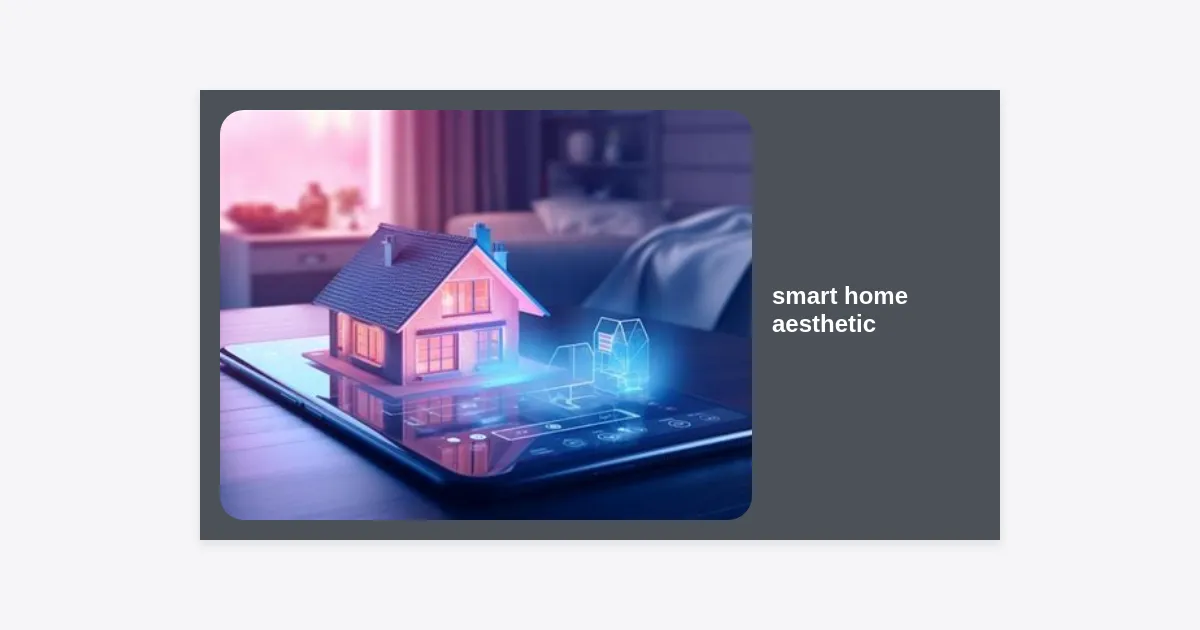
Creating a modern living space is no longer just about choosing the right sofa or paint color. In the digital age, we face a new design challenge: how to integrate advanced technology without making our homes look like a retail electronics store. The smart home aesthetic is the art of balancing cutting-edge convenience with high-end interior design. Whether you are a dedicated tech enthusiast or a minimalist at heart, achieving the perfect smart home aesthetic requires intentionality and a keen eye for detail.
Many homeowners struggle with the visual clutter that often accompanies smart devices—tangled wires, blinking LED lights, and bulky plastic hubs. However, with the right approach, you can transform these functional tools into integral parts of your decor. This guide will walk you through the principles of the smart home aesthetic, providing actionable tips to help you curate a space that is as intelligent as it is beautiful.
Table of Contents
- The Evolution of Home Technology and Interior Design
- Core Principles of the Smart Home Aesthetic
- The Minimalist Approach: Choosing Discreet Devices
- Defining Atmosphere with Smart Lighting
- A Room-by-Room Guide to a Balanced Aesthetic
- Professional Secrets for Hiding Tech Clutter
- Sustainable Luxury: The Eco-Friendly Side of Smart Living
- The Future of Smart Home Aesthetics
- Final Checklist for a Stylish Smart Home
The Evolution of Home Technology and Interior Design
Historically, technology was something to be hidden. TVs were tucked away in armoires, and bulky stereo systems were relegated to dedicated “dens.” As we moved into the 2020s, the paradigm shifted. Technology became smaller, sleeker, and more pervasive. The smart home aesthetic emerged as a response to this shift, moving away from hiding tech toward integrating it.
According to recent market research, over 60 million households in the United States now use smart home devices regularly. This mass adoption has forced manufacturers to prioritize industrial design. We are seeing a move away from “techy” materials like shiny black plastic in favor of wood, fabric, and matte metals that complement modern home furnishings.
“The most successful smart homes are those where the technology feels like a natural extension of the architecture, rather than an afterthought bolted onto the walls.” — Interior Design Lead, Antigravity Labs.
Core Principles of the Smart Home Aesthetic
To master the smart home aesthetic, you must understand three foundational principles: invisibility, cohesion, and intentionality.
1. Invisibility (or Subtlety): The goal is not necessarily to hide everything, but to ensure that nothing screams “look at me” for the wrong reasons. A smart thermostat should blend into the wall, not look like a spaceship control panel.
2. Cohesion: Your smart devices should share a similar design language. If your kitchen has brushed gold fixtures, a smart faucet with a matching finish is essential. Mixing different “tech styles” (e.g., retro-cool vs. ultra-futuristic) can create a jarring visual experience.
3. Intentionality: Every device should serve a purpose. Avoid “gadget creep,” where you add devices just for the sake of novelty. A cluttered smart home is the enemy of a clean aesthetic.
The Minimalist Approach: Choosing Discreet Devices
The easiest way to maintain a clean smart home aesthetic is to select devices that don’t look like devices. The “Minimalist Smart Home” movement favors products that use natural materials or have ultra-thin profiles.
- Smart Hubs with Fabric Finishes: Many smart speakers and hubs now come wrapped in acoustic fabric. These blend perfectly with upholstery and soft goods in a living room.
- The Frame TV: This is perhaps the gold standard of the smart home aesthetic. When not in use, it displays high-resolution art and sits flush against the wall, indistinguishable from a traditional painting.
- Recessed Sensors: Instead of sticking motion sensors on the corners of your ceiling, look for recessed or ultra-low-profile sensors that can be painted to match your walls.
By prioritizing “invisible” tech, you allow your furniture and architectural features to remain the stars of the show, while the smart features work silently in the background.
Defining Atmosphere with Smart Lighting
Lighting is the most powerful tool in your smart home aesthetic arsenal. It has the ability to transform a room’s mood at the touch of a button or a voice command. Smart lighting should be used both for functionality and as an aesthetic element.
Consider the “layered lighting” approach: Ambient lighting for general visibility, task lighting for specific activities, and accent lighting to highlight art or architecture. Smart bulbs and strips allow you to adjust the “color temperature” of these layers. During the day, a crisp, cool white (4000K-5000K) can boost productivity. In the evening, a warm, amber glow (2000K-2700K) creates a cozy, inviting atmosphere.
Pro Tip: Use smart LED strips behind TVs (bias lighting) or under kitchen cabinets to create depth. This adds a sophisticated glow that enhances the architectural lines of your home without adding bulky fixtures.
A Room-by-Room Guide to a Balanced Aesthetic
Achieving a cohesive smart home aesthetic requires a tailored strategy for every room in the house. Here is how to handle the most important spaces:
The Living Room: Entertainment Meets Elegance
The living room is often the hub of the home. To maintain a high-end aesthetic, focus on cable management and hidden speakers. In-wall or in-ceiling speakers provide incredible sound without the visual clutter of large floor-standing units. If you prefer visible speakers, choose brands known for their industrial design, such as Sonos or Bang & Olufsen, which treat their products as sculptural pieces.
The Kitchen: High-Tech Culinary Style
In the kitchen, the smart home aesthetic is all about integration. Smart refrigerators with built-in screens can act as a digital family command center. To keep it stylish, look for panel-ready appliances that allow you to cover the smart tech with the same cabinetry as the rest of your kitchen. This creates a seamless, “hidden” look that is highly sought after in luxury real estate.
The Bedroom: Sanctuary of Serenity
The bedroom should be a low-tech environment, or at least feel like one. Avoid blue-light-emitting screens where possible. Use smart motorized shades that are hidden inside a valance. These can be programmed to open slowly with the sunrise, providing a natural wake-up call that feels luxurious rather than disruptive. Smart air purifiers with wooden accents or minimalist designs can improve sleep quality without ruining the soft, comfortable vibe of the room.
Professional Secrets for Hiding Tech Clutter
Nothing kills the smart home aesthetic faster than a “spaghetti pile” of cables. Professional installers use several tricks to keep tech invisible:
- In-Wall Cable Routing: Use plastic conduits behind the drywall to run power and data cables. This is especially important for wall-mounted TVs.
- Furniture Integration: Many high-end nightstands and desks now feature integrated wireless charging pads hidden beneath the wood veneer.
- Decorative Boxes: If you must have a router or a hub on a shelf, use a decorative ventilated box. These allow for airflow and signal penetration while masking the blinking lights and plastic housing.
- Smart Switches vs. Smart Bulbs: Using smart switches allows you to keep your beautiful, traditional light fixtures. You get the smart functionality without having to look at an ugly, oversized smart bulb.
Sustainable Luxury: The Eco-Friendly Side of Smart Living
An often-overlooked aspect of the smart home aesthetic is sustainability. A truly modern home is an efficient home. Smart thermostats, leak detectors, and energy-monitoring plugs contribute to a home that is both beautiful and responsible.
Integrating solar-powered smart devices, such as outdoor path lights or security cameras, reduces the need for wiring and battery changes. This “clean energy” approach resonates with the modern minimalist aesthetic, which values simplicity and harmony with the environment.
The Future of Smart Home Aesthetics
As we look toward the future, the smart home aesthetic is moving toward “Calm Technology.” This concept, pioneered by researchers at Xerox PARC, suggests that technology should only require our attention when necessary and otherwise remain in our periphery. We are seeing the rise of wooden “touch” surfaces—where a control panel only appears when you wave your hand over a piece of furniture—and high-tech fabrics that act as interfaces.
Artificial Intelligence will also play a role by predicting our needs. Instead of us interacting with screens and buttons, the home will adjust itself—lighting, temperature, and music—automatically, allowing the physical aesthetic of the room to remain undisturbed by human-to-machine interfaces.
Final Checklist for a Stylish Smart Home
Before you purchase your next batch of gadgets, use this checklist to ensure they meet your smart home aesthetic goals:
- Finish Match: Does the device’s color and texture match your room’s palette?
- Cable Plan: Where will the power cord go? Is there a nearby outlet or a way to hide the wire?
- Necessity: Does this device solve a problem, or is it just adding clutter?
- Ecosystem: Does it work with your existing voice assistant to minimize the need for multiple apps/hubs?
- Lights: Can you dim or turn off the status LEDs on the device?
By following these guidelines, you can build a home that is at the cutting edge of technology while maintaining a sophisticated, timeless interior design. The smart home aesthetic isn’t about the gadgets you have; it’s about how those gadgets make your home feel.
Conclusion
The journey to a perfect smart home aesthetic is a continuous process of refinement. It starts with a commitment to quality over quantity and a desire to create a space that serves your lifestyle. Remember that technology is a tool to enhance your environment, not a replacement for good design. By focusing on layered lighting, hidden cables, and thoughtfully chosen devices, you can enjoy all the benefits of a connected home without sacrificing your personal style.
Start small, prioritize the rooms where you spend the most time, and always keep an eye on the visual balance of your space. With these strategies, your smart home will be the envy of tech-lovers and design enthusiasts alike.