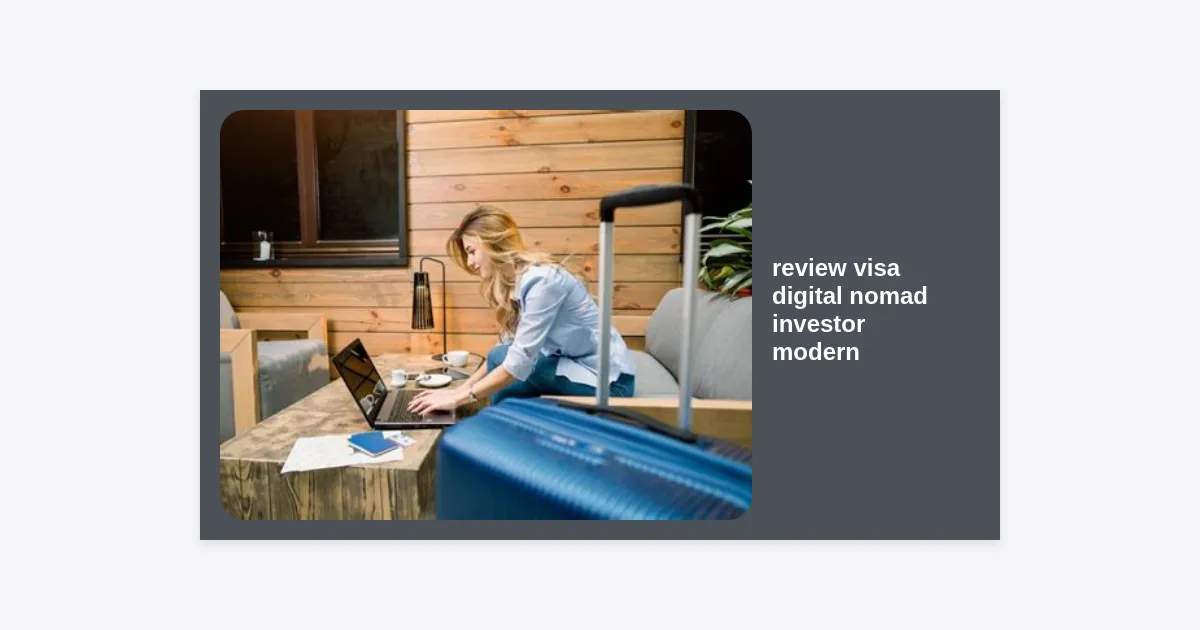
Choosing to live a borderless life is no longer a futuristic dream but a tangible reality for millions. Whether you are an entrepreneur looking for new markets or a remote worker seeking a sunset backdrop for your Zoom calls, understanding the current landscape of residency is crucial. In this review visa digital nomad investor modern guide, we will analyze the best programs available today, comparing the low-cost digital nomad routes against the high-stability investor visas to help you make an informed decision for your professional and personal future.
- The Modern Landscape of Global Mobility
- Digital Nomad Visas vs. Investor Visas: A Comparison
- Review: Top Modern Digital Nomad Visas for 2024
- Review: Premier Modern Investor (Golden) Visas
- Key Requirements and Eligibility Criteria
- Navigating Tax Implications and Financial Planning
- Step-by-Step Guide to Applying
- Final Verdict: Which Path Should You Take?
The Modern Landscape of Global Mobility
The concept of residency is evolving. Traditionally, moving to a new country required a local job offer or immediate family ties. However, the rise of the digital economy has forced governments to rethink their immigration policies. Today, over 50 countries have launched specific programs that cater to the “laptop class” and high-net-worth individuals who bring capital and consumption to their shores without taking local jobs.
As we conduct this review visa digital nomad investor modern analysis, it is clear that the primary driver for these programs is economic stimulation. Countries like Spain, Greece, and the UAE are competing for global talent. They aren’t just looking for tourists; they are looking for long-term residents who will contribute to the local economy, rent apartments, and pay for services, all while maintaining their income from foreign sources.
Statistics suggest there are currently over 35 million digital nomads worldwide, a number expected to grow to 1 billion by 2035. This massive shift represents a significant opportunity for nations to attract skilled workers who are traditionally excluded from standard work permit categories. Consequently, the “modern” visa refers to a flexible, tech-forward application process designed for the 21st-century global citizen.
Digital Nomad Visas vs. Investor Visas: A Comparison
Before diving into specific countries, it is essential to distinguish between the two primary pathways: the Digital Nomad Visa (DNV) and the Investor Visa (often called the Golden Visa). While both offer the chance to live abroad, their entry requirements and long-term benefits differ significantly.
Digital Nomad Visas are designed for remote employees and freelancers. The primary requirement is proof of a stable monthly income generated from outside the host country. These visas are usually more affordable to obtain, with application fees ranging from $200 to $2,000. However, they are often temporary, typically valid for one to two years with options to renew.
Investor Visas, on the other hand, require a significant capital injection—usually through real estate, government bonds, or business investment. While the upfront cost is high (often starting at $250,000), they offer more robust benefits, such as a direct path to permanent residency or even citizenship. For those conducting a review visa digital nomad investor modern search, the choice often boils down to: do you have the monthly income or do you have the liquid capital?
Review: Top Modern Digital Nomad Visas for 2024
In this section of our review visa digital nomad investor modern guide, we look at the standout performers in the digital nomad category. These countries have streamlined their bureaucracy and offer lifestyles that appeal to a wide range of remote professionals.
1. Spain Digital Nomad Visa
Launched in early 2023, the Spain Digital Nomad Visa has quickly become a favorite. It allows non-EU citizens to live and work in Spain while working for companies based outside the country. The income requirement is relatively accessible, set at 200% of the national minimum wage (approximately €2,520 per month).
One of the biggest advantages of the Spain DNV is the potential tax benefit under “Beckham’s Law,” which allows nomads to be taxed at a flat rate of 24% on Spanish-sourced income, rather than a progressive rate of up to 47%. This makes it a highly competitive modern option for high-earning freelancers.
2. Portugal Digital Nomad Visa (D8)
Portugal has long been a hub for nomads, and their dedicated D8 visa is the modern successor to the older D7. Unlike the D7, which was aimed at passive income earners, the D8 specifically targets active income earners. Applicants must show they earn at least €3,280 per month (four times the Portuguese minimum wage).
Portugal offers a high quality of life, a safe environment, and a vibrant community in cities like Lisbon and Madeira. However, the recent changes to the Non-Habitual Resident (NHR) tax regime have made it slightly less attractive than it was a few years ago, though it remains a top-tier choice for European residency.
3. Estonia Digital Nomad Visa
Estonia was the first country in the world to launch a dedicated Digital Nomad Visa. It is the perfect example of a modern approach to immigration. The application process is straightforward and can be initiated at Estonian embassies worldwide. With a monthly income requirement of €4,500 (gross of tax), it targets established professionals rather than entry-level freelancers.
Review: Premier Modern Investor (Golden) Visas
For those who prefer to plant roots through capital, investor visas offer a more permanent solution. Our review visa digital nomad investor modern insights suggest that these programs are becoming more restrictive as popular destinations face housing shortages, yet several excellent options remain.
1. Greece Golden Visa
Greece offers one of the most popular Golden Visas in the world. Historically, an investment of €250,000 in real estate was enough. However, the modern regulations have increased the threshold to €800,000 in high-demand areas like Athens and Santorini, while maintaining the lower threshold in less populated regions. It provides immediate residency for the investor and their family and a path to citizenship after seven years of residency.
2. United Arab Emirates (UAE) Golden Visa
The UAE has revolutionized its residency rules with the Golden Visa for investors, entrepreneurs, and exceptional talent. An investment of 2 million AED (approx. $545,000) in real estate grants a 10-year residency. The UAE is particularly attractive because of its 0% personal income tax and world-class infrastructure, making it a primary contender in any review visa digital nomad investor modern comparison.
3. Malta Nomad Residence Permit & Global Residence Program
Malta offers a unique blend. Their Nomad Residence Permit is easy to get for those earning €2,700 monthly. For investors, the Global Residence Program offers residency with a flat 15% tax on remitted income, provided the individual rents or buys property and pays a minimum annual tax of €15,000. It is a sophisticated, modern solution for those with complex global income streams.
Key Requirements and Eligibility Criteria
While every country has its nuances, certain requirements are standard across the board for both nomad and investor categories. To successfully navigate the review visa digital nomad investor modern application process, you generally need the following:
- Proof of Income: Bank statements, pay slips, and employment contracts showing you meet the minimum threshold.
- Health Insurance: Comprehensive coverage that is valid in the host country for the duration of your stay.
- Clean Criminal Record: An FBI background check (or equivalent) from your home country and any country you have lived in for the last 5 years.
- Accommodation: A lease agreement or property deed showing you have a place to live.
- Remote Work Proof: Documentation showing your employer allows remote work or that you own a company registered abroad.
“The secret to a successful visa application is meticulous documentation. Most rejections occur due to missing apostilles or incomplete bank history rather than a lack of eligibility.” — Global Immigration Consultant
Navigating Tax Implications and Financial Planning
When you conduct a review visa digital nomad investor modern lifestyle, tax is the “elephant in the room.” Many nomads mistakenly believe they are exempt from tax if they don’t work for a local company. However, most countries consider you a tax resident if you spend more than 183 days a year within their borders.
It is vital to understand the difference between residency for immigration and residency for tax. Some visas, like the Dubai Remote Work Visa, offer a clear tax-free environment. Others, like the Italian Digital Nomad Visa, may expose you to Italy’s progressive tax rates unless you qualify for specialized schemes for new residents. Always consult with a cross-border tax specialist to avoid double taxation between your home country and your new residence.
Step-by-Step Guide to Applying
Ready to make the move? Follow this modern framework to ensure your application is processed quickly:
- Initial Research: Use this review visa digital nomad investor modern guide to narrow down your top three countries based on income/capital and lifestyle.
- Check Document Validity: Ensure your passport has at least 18-24 months of validity left.
- Gather Legal Documents: Order your criminal record certificates and birth/marriage certificates early, as these often require an Apostille stamp (an international legalization).
- Book a Consultation: Even if you apply yourself, a one-hour session with a local lawyer can save months of delays.
- Submit the Application: Most modern visas allow online submission or submission at a local consulate.
- Plan the Move: Don’t sign a long-term lease until your visa is pre-approved, but have a shortlist of neighborhoods ready.
Final Verdict: Which Path Should You Take?
In conclusion, the review visa digital nomad investor modern landscape is filled with opportunities for those willing to do the paperwork. If you are early in your career or value flexibility over permanence, the Digital Nomad Visa is your best entry point. It requires less capital and allows you to “test drive” a country before committing long-term.
However, if you are looking for long-term security, tax optimization for a large portfolio, or a second passport for your family, the Investor Visa remains the gold standard. While the initial cost is higher, the stability it provides in an uncertain world is often worth the investment.
Key Takeaways:
- Spain and Portugal are top nomad choices due to tax incentives and community.
- UAE and Greece lead the investor category, though thresholds are rising.
- Tax planning is as important as the visa itself.
- Always prepare documents with Apostilles 3-6 months in advance.
The world is more accessible than ever. By choosing the right visa, you aren’t just changing your location; you are upgrading your entire lifestyle and financial future. Start your journey today by auditing your income and choosing the destination that aligns with your 2024 goals.