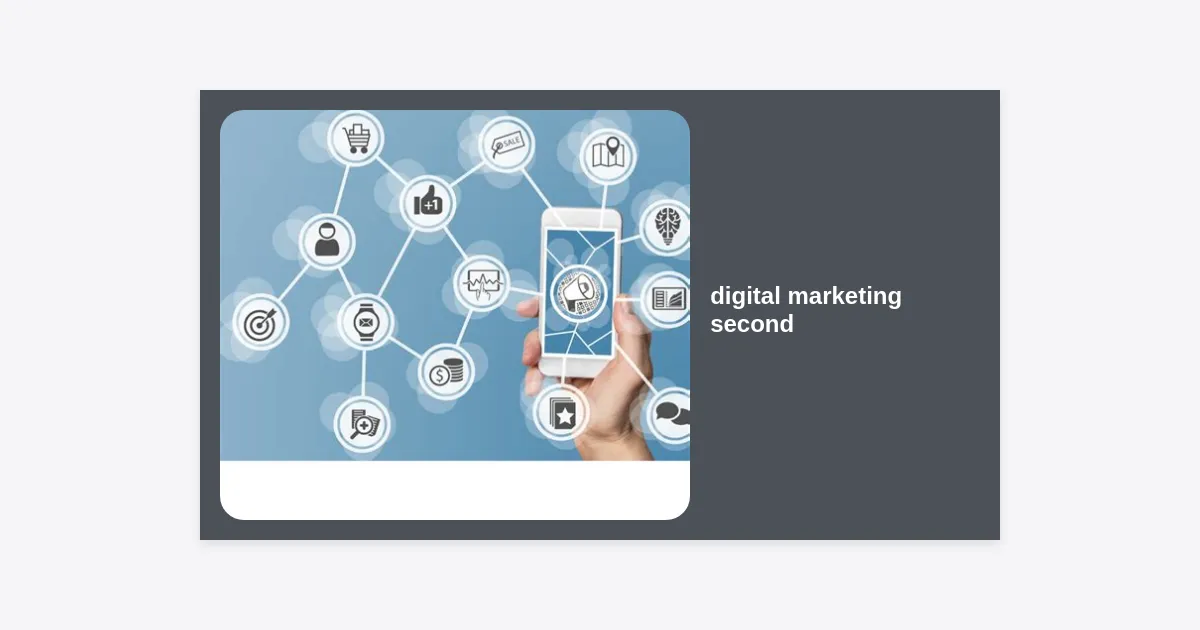
In the rapidly evolving landscape of the 21st-century economy, businesses no longer have the luxury of treating online presence as an optional add-on. To truly thrive, companies must ensure that digital marketing second nature strategies are embedded deep within their organizational DNA. Transitioning from traditional methods to a digitally-integrated approach requires more than just a website; it demands a fundamental shift in how we perceive consumer interaction and value delivery.
- The Evolution: Understanding the Digital Marketing Second Wave
- The Psychology of Modern Consumerism
- Core Pillars of an Advanced Digital Strategy
- Content Mastery: Moving Beyond the Surface
- Data Analytics and the Power of Prediction
- Integrating AI into Your Digital Marketing Second Phase
- Advanced SEO and Search Intent Hierarchy
- Social Media 2.0: From Broadcasting to Community
- Actionable Implementation Guide
- Conclusion and Future Outlook
The Evolution: Understanding the Digital Marketing Second Wave
The first wave of digital marketing was characterized by novelty. Simply having a banner ad or a basic website was enough to garner attention. However, we have entered what experts call the digital marketing second wave, an era defined by hyper-personalization, algorithmic complexity, and a saturation of content that requires brands to be smarter, faster, and more empathetic.
In this second phase, the barrier to entry has lowered, but the barrier to success has plummeted. According to recent industry data, over 70% of businesses now invest in content marketing, yet only a fraction see a tangible Return on Investment (ROI). This gap exists because many are still using first-wave tactics in a second-wave environment.
“Marketing is no longer about the stuff that you make, but about the stories you tell and the connections you create in a digital-first world.”
The Psychology of Modern Consumerism
The modern consumer is hyper-informed. They have access to global price comparisons, peer reviews, and deep-dive technical specifications within seconds. To succeed in the digital marketing second era, you must understand the psychological shift from being a ‘receiver’ of information to an ‘active seeker.’
Trust has become the primary currency. Consumers are increasingly skeptical of polished corporate messaging. They seek authenticity, transparency, and social proof. If your marketing feels like an intrusion rather than a value-add, it will be filtered out by the sophisticated mental firewalls of today’s users.
Core Pillars of an Advanced Digital Strategy
Building a robust strategy requires a multi-faceted approach. You cannot rely on a single channel. Instead, you must build an ecosystem where each touchpoint reinforces the other. This holistic view is what makes digital marketing second nature to successful global brands.
- Multi-Channel Synchronization: Ensuring your message is consistent across email, social media, search, and your website.
- User Experience (UX) First: If your digital interfaces aren’t intuitive, your marketing efforts are wasted.
- Value-Based Lead Magnets: Offering genuine utility before asking for a sale.
- Agile Methodology: The ability to pivot based on real-time data and market shifts.
Content Mastery: Moving Beyond the Surface
We often hear that “Content is King,” but in the digital marketing second generation, only contextual content wears the crown. It is no longer enough to churn out blog posts for the sake of SEO. You must identify the specific pain points of your audience and address them with surgical precision.
High-quality content should serve three purposes: Education, Entertainment, or Empowerment. If your content doesn’t do one of these things, it is likely just noise. Consider implementing a “Content Pillar” strategy where one major piece of research or a long-form guide is repurposed into dozens of smaller assets like infographics, short videos, and social snippets.
Data Analytics and the Power of Prediction
Data should be the heartbeat of your digital marketing second phase. Gone are the days of guessing which headline works best. With tools like Google Analytics 4 (GA4), heatmapping software, and CRM integration, every click tells a story.
Predictive analytics allows you to move from reactive to proactive. By analyzing historical data, you can predict future customer behavior, allowing you to serve the right offer at the exact moment a user is most likely to convert. This level of sophistication is what separates market leaders from laggards.
Integrating AI into Your Digital Marketing Second Phase
Artificial Intelligence is not just a buzzword; it is a fundamental tool for scaling your efforts. AI can assist in content generation, automated customer service through chatbots, and complex data analysis that would take humans weeks to process.
However, the key to digital marketing second wave success with AI is human-in-the-loop. AI provides the efficiency, but humans provide the empathy and strategic oversight. Use AI to handle repetitive tasks so your creative team can focus on high-level strategy and brand storytelling.
Advanced SEO and Search Intent Hierarchy
SEO has moved far beyond keyword stuffing. Modern search engines are powered by Natural Language Processing (NLP) like Google’s BERT and MUM. They understand the intent behind a search query, not just the words.
To rank for digital marketing second generation terms, you must optimize for:
- Informational Intent: High-level guides and “how-to” content.
- Navigational Intent: Ensuring users can find your specific brand or products easily.
- Commercial Intent: Comparison guides and reviews.
- Transactional Intent: Optimized product pages and easy checkout flows.
Social Media 2.0: From Broadcasting to Community
In the early days, social media was treated like digital billboards. Today, the digital marketing second wave approach views social media as a two-way conversation. Community management is now just as important as content creation.
Focus on building “Micro-Communities.” Smaller, highly engaged groups often provide better conversion rates than large, passive following. Respond to every comment, host live Q&A sessions, and encourage User-Generated Content (UGC) to build a feeling of belonging around your brand.
Actionable Implementation Guide
If you are looking to revitalize your strategy, follow these practical steps to make digital marketing second nature to your team:
- Audit Your Current Tech Stack: Ensure your tools are talking to each other. Information silos are the enemy of growth.
- Define Your Ideal Customer Profile (ICP): Be specific. Go beyond demographics to psychographics—what are their fears, aspirations, and daily frustrations?
- Set SMART Goals: Specific, Measurable, Achievable, Relevant, and Time-bound. “Increase traffic” is not a goal; “Increase organic conversion rate by 15% in Q3” is.
- Iterate Rapidly: Launch, measure, learn, and improve. The digital world rewards those who move fast.
To help you get started with your transition, we have compiled a comprehensive resource for your team.
Conclusion and Future Outlook
Mastering the digital marketing second wave is an ongoing journey, not a destination. As technology continues to advance with the integration of Web3, the Metaverse, and even more advanced AI, the core principles remains the same: provide value, build trust, and stay adaptable.
The businesses that will dominate the next decade are those that view digital marketing not as a department, but as a central philosophy. Start by refining your data practices, humanizing your brand voice, and always putting the customer’s needs at the center of your strategic map.
Key Takeaways:
- Contextual content is the key to breaking through digital noise.
- Data must drive decisions, but empathy must drive the message.
- AI is a multiplier for efficiency, not a replacement for human creativity.
- SEO is now about satisfying user intent rather than just matching keywords.