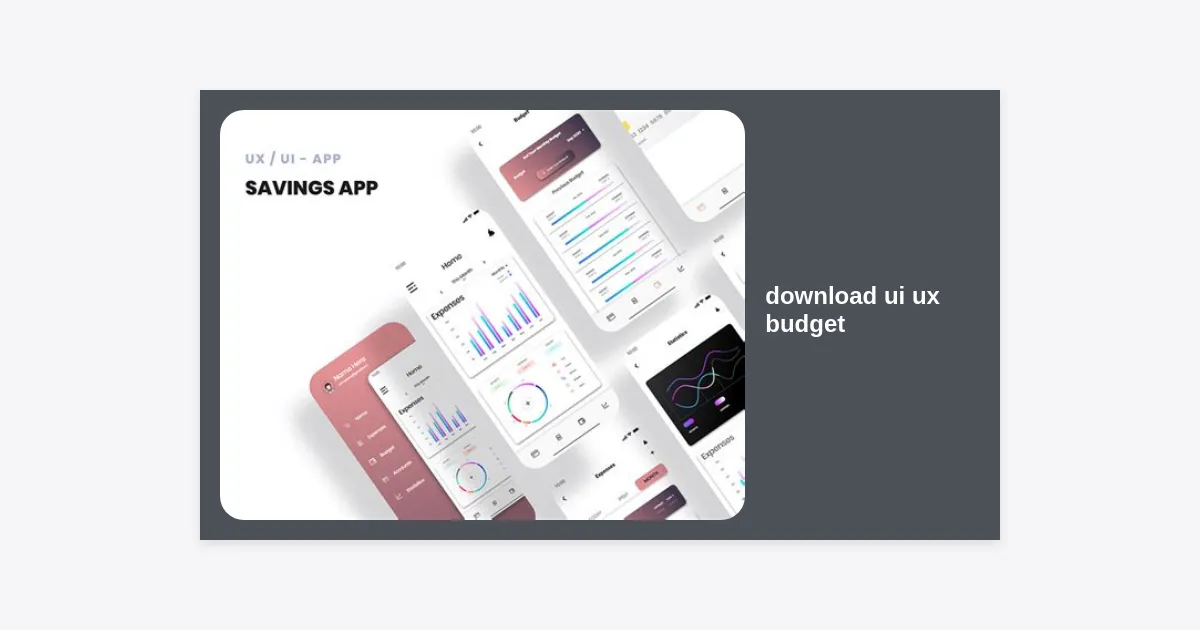
Designing a world-class digital product is a complex journey fraught with creative challenges and technical hurdles. However, one of the most overlooked aspects that can sink a project faster than bad typography is a poorly managed budget. Whether you are a startup founder looking to launch an MVP or a design lead at a Fortune 500 company, knowing how to plan your finances is critical. This guide provides a comprehensive breakdown of everything you need to know, and we even offer a resource to download ui ux budget templates to get you started immediately.
Table of Contents
- Why Budgeting for UI/UX is Critical
- Key Components of a UI/UX Project Budget
- How to Use the Download UI UX Budget Template
- Breaking Down Personnel Costs: Freelancers vs. Agencies
- Software and Tools: Managing Recurring Expenses
- Hidden Expenses: Research, Testing, and Iteration
- Calculating ROI: UX as an Investment
- Conclusion and Next Steps
Why Budgeting for UI/UX is Critical in Modern Product Development
Many stakeholders view User Experience (UX) and User Interface (UI) design as a visual “layer” that is applied at the end of development. This misconception leads to massive budget overruns. In reality, design is the blueprint of your product. Studies have consistently shown that for every $1 invested in UX, the return can be as high as $100. Despite this, projects often fail because they lack a structured financial roadmap.
When you seek to download ui ux budget planners, you are essentially looking for a way to mitigate risk. A well-planned budget ensures that you have enough capital for user testing, which is often the first thing cut when money gets tight. Without user testing, you risk building a beautiful product that nobody knows how to use. This guide will walk you through the nuances of financial planning in the design world.
Key Components of a UI/UX Project Budget
Before you dive into the numbers, you must understand what you are actually paying for. A UI/UX budget isn’t just a single line item; it is a collection of various phases and resources. Generally, it can be broken down into four major buckets:
- Discovery and Research: This includes stakeholder interviews, competitor analysis, and creating user personas.
- Information Architecture and Wireframing: Designing the structure and flow of the application without the visual bells and whistles.
- Visual Design (UI): The aesthetics, branding, typography, and color schemes that make the product appealing.
- Prototyping and Testing: Interactive models that are tested with real users to validate assumptions.
By categorizing your spending this way, you can identify where your money is most effective. For instance, spending more on discovery can save you thousands in development costs later by preventing the need for major structural changes.
How to Use the Download UI UX Budget Template Effectively
We have prepared a professional-grade resource for you. To get started with your financial planning, you can access our template here:
Once you download ui ux budget files, follow these steps to customize them for your project:
- Input Your Project Scope: Clearly define the number of screens and the complexity of interactions.
- Adjust Labor Rates: Whether you are using internal staff or external contractors, enter their hourly rates or project fees.
- Account for Buffer: Always add a 15-20% contingency fund for “scope creep” or unexpected user feedback requirements.
- Review Periodically: A budget Is not a static document. Update it at the end of every sprint or design phase.
Breaking Down Personnel Costs: Freelancers vs. Agencies vs. In-House
The largest portion of your budget will almost always be labor. Depending on your business stage, you have three primary options for staffing your design needs:
1. Freelance Designers
Freelancers are often the most cost-effective solution for startups. Pro tip: When hiring a freelancer, don’t just look at the hourly rate. Look at their efficiency. A senior designer at $100/hour may finish a task in 5 hours that a junior at $40/hour takes 20 hours to complete.
2. Design Agencies
Agencies offer a full-service experience, including project management, strategy, and design. This is usually the most expensive option but provides the highest level of accountability and a multidisciplined team. If you have a high-stakes project with a tight deadline, an agency is often worth the investment.
3. In-House Teams
For long-term product growth, an in-house team is ideal for maintaining consistency and institutional knowledge. However, you must account for overhead costs like benefits, hardware, and office space, which often aren’t captured in the initial “salary” line of a budget.
Software and Tools: Managing Recurring Expenses
The modern designer’s toolkit is primarily subscription-based. While individual licenses might seem cheap, they add up across a team. Your download ui ux budget analysis should include the following common tools:
- Design & Prototyping: Figma (the industry leader), Adobe XD, or Sketch.
- Research & Testing: Maze, UserTesting, or Lookback.
- Communication & Handoff: Slack, Zeplin, or Storybook.
- Project Management: Jira, Asana, or Trello.
“The cost of tools is negligible compared to the cost of wasted time. Invest in the software that enables your team to collaborate seamlessly.”
Hidden Expenses: Research, Testing, and Iteration
This is where most budgets fail. Professionals often forget to account for the “cost of being wrong.” Design is iterative. Your first version will likely have flaws that only user testing will reveal. To build a robust plan, ensure you allocate funds for:
User Recruitment
You need real people to test your designs. Depending on your niche (e.g., specialized medical doctors vs. general consumers), recruiting participants can cost anywhere from $50 to $500 per person.
Accessibility Audits
Legal compliance (WCAG) is no longer optional. Budgeting for an accessibility specialist to review your designs can save you from massive legal fees and ensure your product is usable by everyone.
Design System Maintenance
If you are building a large product, you need a design system. This isn’t a one-and-done task; it requires ongoing maintenance to ensure that UI components remain consistent as the product scales.
Calculating ROI: Why UX is an Investment, Not an Expense
To justify your download ui ux budget to stakeholders or clients, you must speak the language of business. UI/UX provides value in several measurable ways:
- Increased Conversion Rates: Better UI leads to a smoother checkout or signup process.
- Reduced Support Costs: If a product is intuitive, users won’t need to contact support.
- Lower Development Costs: Fixing a problem in the design phase is 10x cheaper than fixing it in code.
- Customer Loyalty: A positive experience keeps users coming back, increasing the Lifetime Value (LTV).
By presenting these metrics alongside your budget, you shift the conversation from “How much does this cost?” to “How much value will this generate?” This is the hallmark of a mature design organization.
Conclusion: Take Control of Your Design Budget Today
Effective UI/UX design is a balance of creativity and constraint. By taking the time to plan your finances, you empower your design team to do their best work without the stress of running out of resources halfway through the project. Remember that every dollar spent on research and planning saves significantly more during the development and launch phases.
Key Takeaways:
- Always include a contingency fund of at least 15%.
- Prioritize user research and testing early in the cycle.
- Use a dedicated template to track and manage expenses.
- Treat design as a revenue generator, not a cost center.
Now is the time to get organized. Use the link above to download ui ux budget resources and start building your next great product with financial confidence. If you have questions about specific tool costs or hiring rates, feel free to reach out to our team of experts for a free consultation.