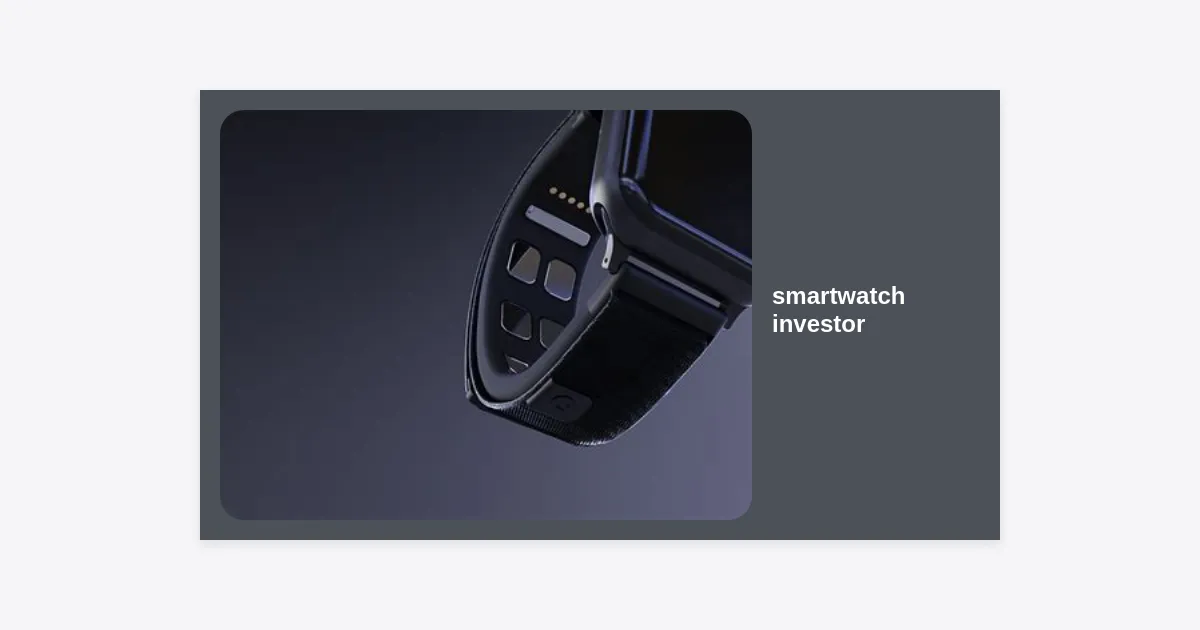
The global technology landscape is shifting from the palm of our hands to the pulse of our wrists. For a forward-thinking smartwatch investor, this transition represents one of the most significant wealth-creation opportunities of the decade. As wearable devices evolve from simple step-counters into sophisticated medical-grade health monitors and communication hubs, the financial implications are staggering. If you are looking to diversify your portfolio with high-growth tech assets, understanding the nuances of the wearable market is no longer optional—it is essential.
- 1. The Current Landscape for a Smartwatch Investor
- 2. Key Growth Drivers in Wearable Technology
- 3. Top Stocks for the Smartwatch Investor
- 4. Emerging Trends: AI and Biometrics
- 5. Risk Management and Market Volatility
- 6. How to Value a Wearable Tech Company
- 7. The 10-Year Outlook
- 8. Conclusion and Next Steps
The Current Landscape for a Smartwatch Investor
To be an effective smartwatch investor, one must first recognize the sheer scale of the industry. According to recent market analysis, the global smartwatch market size was valued at approximately USD 30.43 billion in 2023 and is projected to expand at a compound annual growth rate (CAGR) of 14.84% through 2030. This isn’t just about selling gadgets; it’s about the integration of hardware, software, and subscription-based health data.
Early movers in the space focused on notifications and aesthetics. However, the modern smartwatch investor pays closer attention to “ecosystem lock-in.” Companies that control both the operating system and the hardware hardware—think Apple with watchOS or Google with Wear OS—possess a competitive moat that is incredibly difficult to breach. This synergy drives recurring revenue through app stores and cloud storage services.
Key Growth Drivers in Wearable Technology
What exactly is fueling this growth? For any smartwatch investor, the primary catalyst is the “medicalization” of wearables. We are moving away from fitness trackers and toward diagnostic tools. Features like ECG monitoring, blood oxygen levels, and now, the “holy grail” of non-invasive glucose monitoring, are turning smartwatches into indispensable healthcare companions.
- Aging Demographics: As the global population ages, the demand for remote patient monitoring (RPM) increases.
- Insurance Integration: Health insurance providers are increasingly subsidizing smartwatches to encourage healthier lifestyles among policyholders.
- Technological Convergence: The narrowing gap between smartphone capabilities and wrist-worn computing power.
As a smartwatch investor, you should track how these devices are being integrated into hospital workflows. Companies like Garmin and Apple are no longer just selling to consumers; they are selling to healthcare networks. This shift from B2C to B2B models provides a more stable revenue stream and higher valuation multiples.
Top Stocks for the Smartwatch Investor
Identifying specific assets is the core task of a smartwatch investor. While the market is dominated by a few giants, there are niche players that offer significant upside. Here is a breakdown of the key players currently dominating the sector:
1. Apple (AAPL)
Apple remains the benchmark. With over 30% of the worldwide market share, the Apple Watch is the engine driving the company’s “Wearables, Home, and Accessories” segment. For a smartwatch investor, Apple represents stability and high-margin ecosystem growth.
2. Garmin (GRMN)
Garmin caters to the high-end, enthusiast market. Their focus on battery longevity and specialized GPS features for athletes and pilots allows them to maintain premium pricing. A smartwatch investor appreciates Garmin’s vertically integrated manufacturing and strong balance sheet.
3. Samsung (SSNLF)
As the primary challenger in the Android ecosystem, Samsung leverages its display technology and semiconductor prowess to innovate rapidly. Their partnership with Google on Wear OS has dramatically improved their software experience, making them a top pick for an international smartwatch investor.
“The wearable market is transitioning from a ‘want’ to a ‘need.’ Investors who recognize the diagnostic potential of these devices early will be the ones who reap the greatest rewards over the next decade.”
— Market Analyst, Tech Insights 2024
Emerging Trends: AI and Biometrics
The role of a smartwatch investor involves looking past current features to future innovations. Artificial Intelligence (AI) is the next frontier. Imagine a watch that doesn’t just record your heart rate but predicts a potential health crisis 48 hours before it happens using machine learning models.
Biometric sensors are also becoming more specialized. We are seeing the emergence of hydration sensors, sweat analysis, and skin temperature monitors for fertility tracking. Each new sensor expands the addressable market for the smartwatch investor, as these tools become vital for specific demographics, such as elite athletes or women managing reproductive health.
Risk Management and Market Volatility
Every smartwatch investor must be aware of the risks. The tech sector is highly sensitive to interest rate fluctuations and supply chain disruptions. Furthermore, privacy remains a massive hurdle. As these devices collect more sensitive health data, companies face increased scrutiny from regulators regarding data protection (GDPR, HIPAA).
Another risk for the smartwatch investor is “feature commoditization.” When low-cost manufacturers can replicate advanced sensors for a fraction of the price, brand loyalty and software ecosystems become the only true defenses. Always look for companies with a high Research & Development (R&D) spend relative to their revenue, as this indicates they are staying ahead of the commodity curve.
How to Value a Wearable Tech Company
When you act as a smartwatch investor, you cannot rely solely on traditional P/E ratios. You must look at metrics that reflect the unique nature of the tech-health hybrid market:
- Average Revenue Per User (ARPU): Does the company sell a device once, or do they have a subscription service (like Fitbit Premium) that generates monthly income?
- Churn Rate: How often do users upgrade their devices? High loyalty is crucial for long-term sustainability.
- R&D Efficiency: How effectively is the company turning R&D investment into patented sensor technology?
- Regulatory Approvals: Has the device received FDA clearance? In the eyes of a smartwatch investor, an FDA-cleared device is worth significantly more than a “wellness-only” tracker.
The 10-Year Outlook
Looking ahead, the smartwatch investor should prepare for the convergence of smartwatches and smart rings, as well as the integration of augmented reality (AR). The wrist will remain the primary hub for human-computer interaction because of its accessibility and the constant contact with skin required for biometrics.
Expected breakthroughs in solid-state battery technology will solve the biggest pain point in the industry: battery life. Once smartwatches can last for weeks rather than days on a single charge, adoption rates among the elderly and in developing nations will skyrocket, providing a massive tailwind for any smartwatch investor.
Conclusion and Next Steps
In conclusion, becoming a smartwatch investor requires a blend of technical curiosity and financial discipline. The industry is moving beyond the “gadget” phase and into the “essential infrastructure” phase of digital health and personal communication. By focusing on companies that lead in biometric innovation, ecosystem integration, and regulatory compliance, you can position yourself at the forefront of this technological revolution.
Key Takeaways for the Smartwatch Investor:
- Monitor the transition from fitness trackers to medical-grade diagnostic tools.
- Prioritize companies with strong software ecosystems and recurring revenue potential.
- Keep an eye on AI integration as a primary differentiator for future device cycles.
- Diversify between established giants and high-growth niche players.
The time to start your journey as a smartwatch investor is now. As the world becomes more connected and health-conscious, the value of the real estate on the human wrist will only continue to appreciate. Start by researching the top players mentioned in this guide and building a diversified portfolio that can weather market volatility while capturing long-term growth.