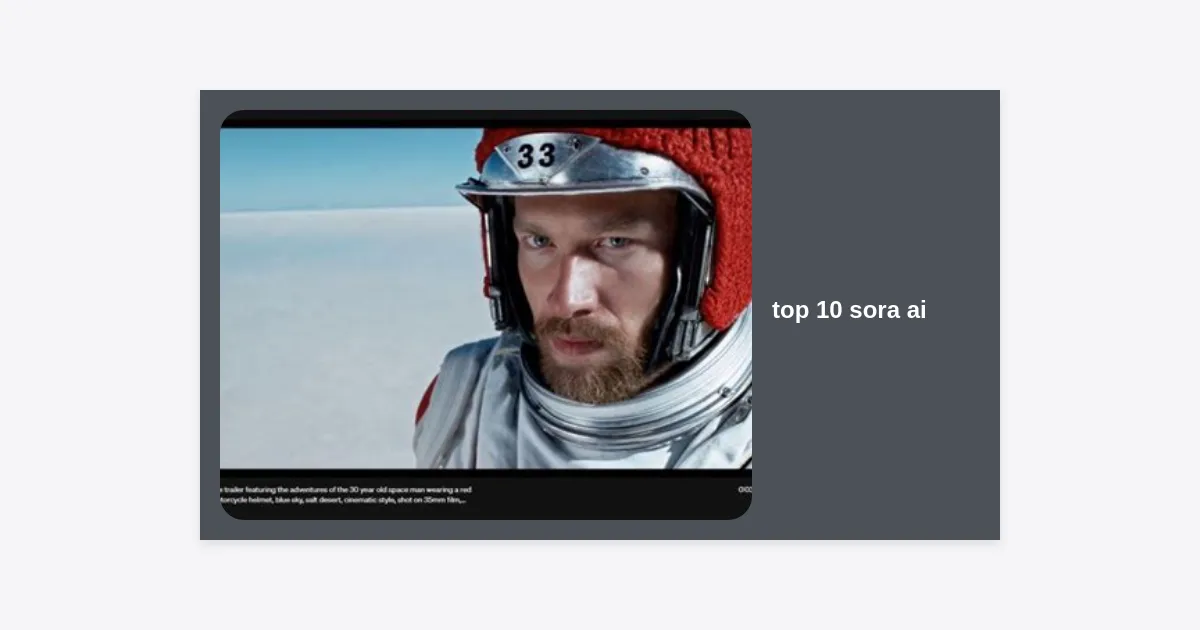
The landscape of digital content creation underwent a seismic shift in early 2024 when OpenAI announced its text-to-video model, Sora. Exploring the top 10 sora ai features reveals a world where the boundary between cinematic reality and artificial generation is virtually nonexistent. Whether you are a filmmaker, a digital marketer, or a tech enthusiast, understanding how this technology functions is no longer optional—it is essential for staying ahead in the creator economy.
What is Sora AI?
Sora is OpenAI’s state-of-the-art text-to-video model designed to generate realistic and imaginative scenes from text instructions. While previous iterations of video AI often felt jittery or surreal, Sora represents a leap forward in temporal consistency and visual fidelity. It doesn’t just generate images that move; it simulates a physical world with a level of detail that has stunned the industry.
Currently, Sora is in a “red teaming” phase, meaning it is being tested by experts to identify potential harms and risks. However, the demos released have already set a high bar for what we expect from the top 10 sora ai ecosystem. By using a diffusion model combined with transformer architecture, Sora understands not just what the user asks for, but how those things exist in the physical world.
Top 10 Sora AI Breakthroughs and Capabilities
When we look at the top 10 sora ai capabilities, we see more than just a video generator; we see a world simulator. Here are the most significant breakthroughs that define this model:
1. High-Fidelity 60-Second Video Generation
Most AI video generators are limited to 3 to 10 seconds of coherent footage. Sora shattered these limits by producing up to 60 seconds of high-definition video. This allows for complex storytelling and continuous shots that were previously impossible without heavy manual editing.
2. Complex Scene Construction
Sora can navigate complex prompts that involve multiple characters, specific types of motion, and accurate subject/background details. It understands how a character interacts with their environment, such as a person walking through a crowded street in Tokyo and the way the neon lights reflect on the wet pavement.
3. Temporal Consistency and Persistence
One of the biggest hurdles in AI video has been character consistency—the tendency for objects to change shape or disappear when the camera moves. Sora maintains object permanence, meaning if a character walks behind a tree, they remain the same character when they emerge on the other side.
4. Advanced Camera Dynamics
The model simulates professional cinematography. Whether it’s a sweeping drone shot, a tight close-up, or a complex tracking shot, Sora understands how the perspective should change as the “camera” moves through 3D space, making the output look like it was filmed by a human director.
5. Language Understanding (DALL-E 3 Synergy)
By leveraging the recaptioning technique from DALL-E 3, Sora is highly responsive to user prompts. It follows complex instructions accurately, translating descriptive adjectives and technical directing terms into visual representations with high fidelity.
6. Image-to-Video Transformation
Beyond text-to-video, Sora can take a static image and animate it. This opens up doors for photographers and concept artists to breathe life into their still works, maintaining 100% of the original image’s style and detail while adding realistic motion.
7. Video-to-Video Editing
Sora has shown the capability to take an existing video and change its style, environment, or characters while keeping the original motion flow. You could turn a video of a person walking in a park into a video of that same person walking on the surface of Mars with a single prompt.
8. Extending Videos Forwards and Backwards
A unique feature in the top 10 sora ai list is the ability to extend a video clip in either direction. If you have a clip of a car driving, Sora can generate what happened before the car arrived and what happens after it passes, creating a seamless loop or a longer narrative.
9. World Simulation (Physics)
While not a perfect physics engine, Sora shows emergent properties of simulating the physical world. It understands that a bite taken out of a cookie should leave a mark, or that a paintbrush moving across a canvas should leave a trail of color. This “intuitive physics” is a massive step toward AGI (Artificial General Intelligence).
10. Multi-Resolution and Aspect Ratio Flexibility
Sora is not locked into a single format. It can generate widescreen 1920x1080p, vertical 1080×1920 for TikTok/Reels, and everything in between. This makes it a versatile tool for creators across different social media platforms and cinematic stages.
The Technical Magic Behind the Scenes
To appreciate why Sora is at the top of the AI food chain, we must look at its architecture. Traditionally, video models used Recurrent Neural Networks (RNNs) or Generative Adversarial Networks (GANs). Sora, however, uses a Diffusion Transformer.
“Sora is a diffusion model, which generates a video by starting with one that looks like static noise and gradually transforms it by removing the noise over many steps.” — OpenAI Technical Report
By treating video data as “patches” (similar to how GPT treats text as tokens), Sora can be trained on a massive variety of visual data. This scalability is why it can handle different durations, resolutions, and aspect ratios better than any model before it. It learns the underlying patterns of how light, motion, and matter interact, allowing it to predict what the next frame should look like with frightening accuracy.
Top Sora AI Alternatives Available Now
While the world waits for Sora to be publicly released, several other powerhouses are already available. If you are looking for the top 10 sora ai alternatives to start creating today, consider these options:
- Runway Gen-3 Alpha: Known for its cinematic quality and deep control over camera movement and motion brushes.
- Luma Dream Machine: A highly competitive model capable of generating realistic 5-second clips with high physical accuracy.
- Kling AI: A major player emerging from China that offers up to 2-minute videos with impressive realism.
- Pika Labs (Pika 1.5): Excellent for stylized content, animation, and unique physics-defying effects like “crush it” or “melt it.”
- Haiper AI: A newer tool focusing on high-quality artistic renders and creative exploration.
Industries Transformed by AI Video
The implications of the top 10 sora ai capabilities extend far beyond social media clips. Large-scale industries are currently re-evaluating their workflows based on this tech.
Marketing and Advertising: Brands can now A/B test video ads with minimal costs. Instead of a $50,000 production for a 30-second spot, an agency could generate 10 variations in a day to see which performs best with their target audience.
Education and Training: Complex concepts like historical events or scientific theories can be visualized instantly. A teacher could prompt a video of the Roman Colosseum at its peak or the molecular dance within a human cell, providing students with an immersive learning experience.
Prototyping in Filmmaking: Director’s use “previz” (pre-visualization) to plan shots. Sora allows directors to create high-fidelity storyboards that look like the final product, helping them secure funding and plan logistics more effectively than ever before.
Master the art of prompting for Sora and its alternatives.
Safety, Ethics, and the Future
With great power comes great responsibility. OpenAI has been transparent about the limitations of Sora. It can struggle with complex physics (like a glass shattering and then flowing back together) and left-right confusion. More importantly, the potential for deepfakes and misinformation is high.
OpenAI is developing tools to detect Sora-generated content, including C2PA metadata. They are also working with “red teamers” from various backgrounds—misinformation, hateful content, and bias—to ensure the model is as safe as possible before it hits the mainstream. Trustworthiness is the final hurdle that will determine Sora’s success in the professional world.
Conclusion and Final Thoughts
The top 10 sora ai features represent more than just a technological milestone; they represent a new era of human creativity. By lowering the barrier to entry for high-quality video production, Sora empowers creators to realize visions that were previously limited by budget or technical skill.
As we move toward a future where text becomes video instantaneously, the most valuable skill will not be operating a camera, but the ability to dream, describe, and direct. Start experimenting with Sora’s alternatives today so you are ready when the most powerful video AI in history becomes available to the public.
Key Takeaways:
- Sora can generate up to 60 seconds of high-fidelity, consistent video.
- It uses a Diffusion Transformer architecture for superior world simulation.
- Alternatives like Runway and Luma are currently available for immediate use.
- Safety remains a top priority for OpenAI before a full public rollout.